
A Durham University study has revealed that older people are more likely to be abused by their partners than by a family member.
The analysis of data on domestic abuse of adults aged 60-74, found that older people are more likely to be abused by their partners than by a family member, showing a contrast to previous studies.
The research, using data from the Crime Survey for England and Wales, found that older adults with bad or very bad health were three times more likely to experience partner or family abuse compared to people with good health. The analysis also showed that single older adults had a two and half times higher risk of family abuse than those who were in relationships.
Older people who were unemployed or economically inactive were two and half times more likely to be a victim.
Comparing risk factors for older and younger people, the findings suggest that for older adults, men and women are equally at risk of being victimised by a family member whereas for younger people, women are more at risk of this.
However, most other risk factors were the broadly the same for both older and younger victims.
Professor Hannah Bows from the Law School at Durham University, who led the study, said: "The perceived low risk of victimisation of older adults has been largely unchallenged and wrongly accepted as fact. This is the first time we've been able to shine a light on the risk factors for this age group. It shows that people experience domestic abuse in later life and more of this is perpetrated by partners than family members. Crucially, it also shows that the risk factors for domestic abuse are broadly similar for younger and older people – what matters is who is perpetrating abuse more than the age of the victim."
The study, conducted by Durham University, City University of London and the University of Hull, is published in the European Journal of Criminology.
The researchers suggest that organisations dealing with domestic abuse should review current policies around risk assessment and management to ensure that abuse of older people, both by partners and family members, is properly captured.
The study looked at various types of abuse by a domestic perpetrator, including force, threats, sexual assault, stalking and non-physical abuse. Domestic perpetrators could be an intimate partner or ex-partner, or a family member.
A previous analysis by Professor Bows showed that over 25 per cent of domestic homicide cases in the UK are of people over 60, despite this age group only accounting for 18 per cent of the population.
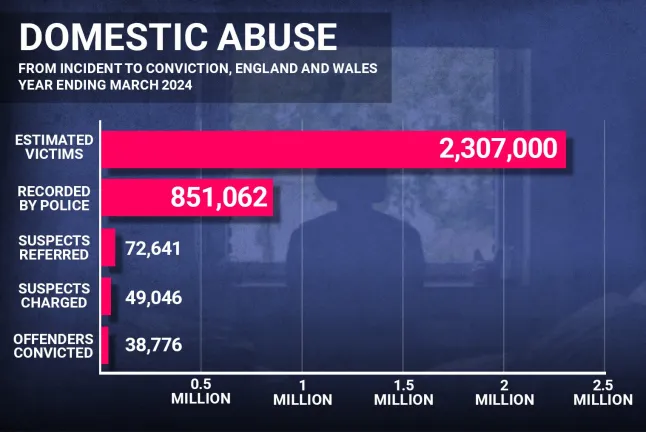
The current study shows that around three per cent of older adults in England and Wales are victims of domestic abuse each year, which equates to approximately 280,000 people. In comparison, around six per cent of people between 16-59 experience domestic abuse each year.
The team analysed data from the Crime Survey for England and Wales (CSEW) on domestic violence, sexual violence and stalking. The CSEW is a nationally representative annual household survey commissioned by the Office for National Statistics. It samples around 35,000 people each year and has a response rate of around 70 per cent.
The survey previously had an age-cap of 59 for the collection of data on domestic abuse of older adults. This was increased to 74 and in 2020, the age-cap was lifted altogether.