The Dual Impact Collaboration Model (DICM) is the engine of the Pluggin civic infrastructure.
Created with and for public procurement authorities, the DICM Engine is currently supporting social value mobilisation across £2.1 billion in public procurement spend.
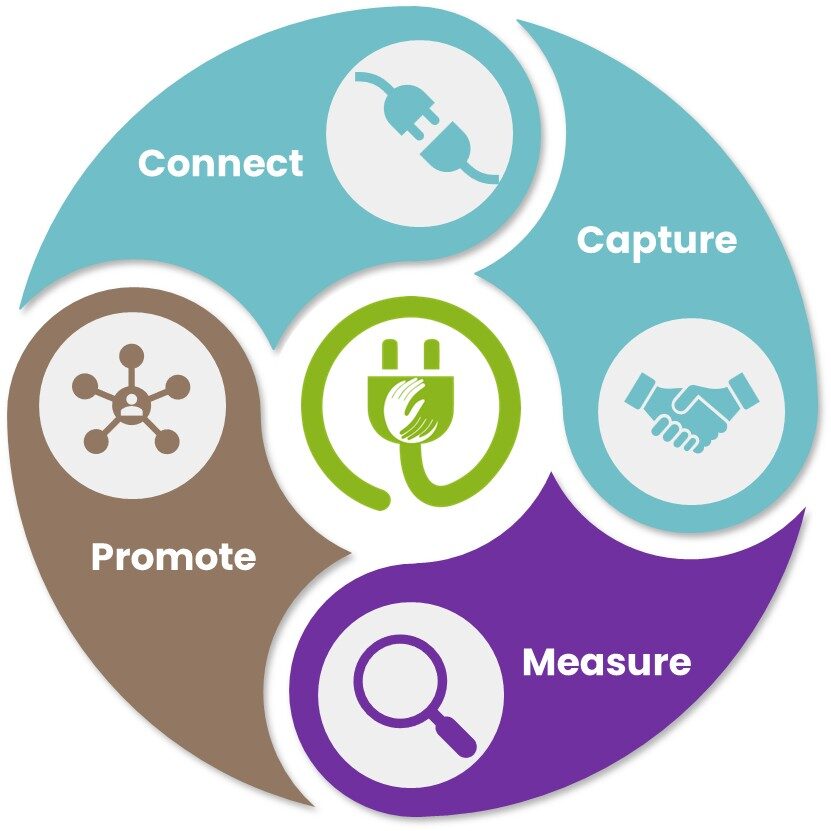
The DICM Engine provides a real-time technology based environment which connects and captures contract social value pledges, then measures and promotes this as business resources deployed deep into the frontlines of community health, safety and resilience.
This is a communities-led solution with a "closed-loop" data moat that enables public authorities to meet the strategic requirements of the Governments of England & Wales.
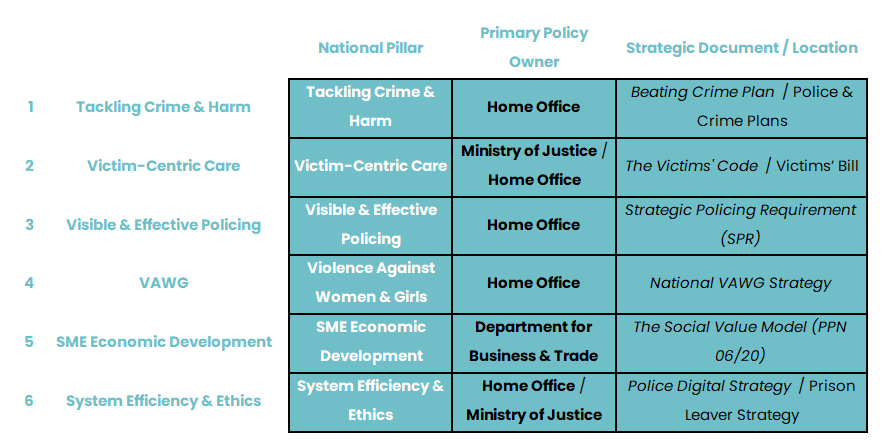
England
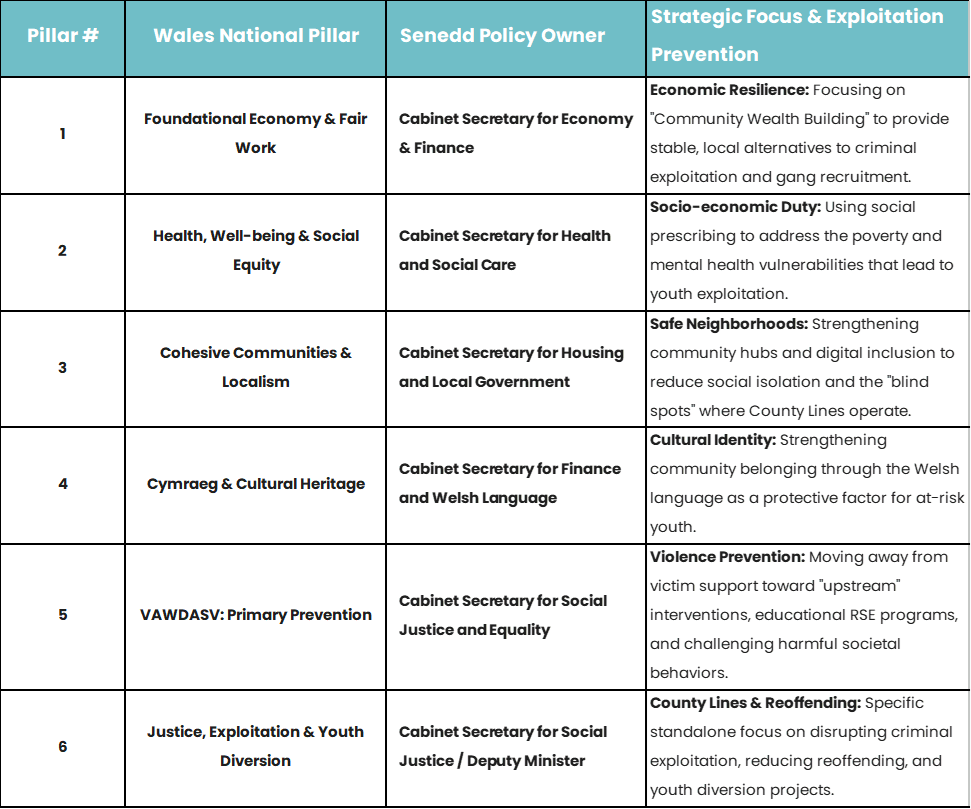
Wales
We've made contracting social value a S.M.A.R.T and collaboration-led process, to drive a powerful community Dual Impact...
The DICM Engine transforms how public buyers receive, score, award and review supplier social value in their local areas.
S.M.A.R.T : We've moved social value bids and public buyer scoring from "CSR/ESG promises" over to a contract-locked Smart, Measurable, Achievable, Relevant and Time-bound metric. Social value is developed between business and Pluggin Marketplace listed community organisation as a collaboration proposal and submitted at bid stage. Upon contract award, the new supplier's S.M.A.R.T social value pledge is locked into a Collaboration Agreement with the charity/social enterprise and this is locked-into the Service Level Agreement. This agreement then is tracked by buyers in real-time, within our civic infrastructure, where a Dual Impact is the main objective.
Primary Impact
Geographically, businesses are supporting the local charities & social enterprises already part of building healthier, safer and more resilient communities;
Secondary Impact
Primary Impact is then delivering reductions in demand for and costs of frontline policing, council health & community care services, and criminal justice service.
With the rapid expansion of the Pluggin Marketplace, suppliers need to know that ad-hoc, geographically disconnected social value no longer works...
1. Eliminating "Social Value Washing"
-
-
The Issue: Suppliers often make vague, grandiose commitments during the tender stage that are difficult to verify or fail to materialize once the contract is signed.
-
The DICM Resolution: By creating a Single Point of Truth, the engine connects every commitment to a specific, pre-validated community project. It replaces "marketing fluff" with a mandatory ledger of action, ensuring that what is promised in the bid is delivered on the ground.
-
2. Solving the "Data Blindness" Crisis
-
-
The Issue: Impact data is usually scattered across PDFs, spreadsheets, and annual reports, making it impossible for the Home Office or Cabinet Office to see a unified picture of national or regional impact.
-
The DICM Resolution: As the UK’s first engine to automate data capture from the charity beneficiaries themselves, we centralize the "Value-to-Contract" link. This allows authorities to view the real-time social ROI of their entire procurement portfolio through a single, transparent dashboard.
-
3. Ending the "Post-Award" Accountability Gap
-
-
The Issue: Once a contract is awarded, public buyers often lack the resources to monitor whether a supplier is actually fulfilling their social obligations.
-
The DICM Resolution: The engine automates the monitoring process. Because the data is captured directly from the frontline beneficiaries and fed back to the individual contract, the system provides an "always-on" audit trail. This reduces the administrative burden on procurement officers while maintaining 100% accountability.
-
4. Aligning National Spend with Local Objectives
-
-
The Issue: Large-scale "Tier-1" suppliers often struggle to connect with impactful local charities or SMEs, leading to social value spend being disconnected from local needs.
-
The DICM Resolution: The engine acts as a strategic bridge. It enables authorities to direct supplier resources into the specific health, safety, and resilience objectives of their local area. This ensures that national procurement budgets are actively strengthening the very communities the public authorities serve.
-
The Bottom Line:
The DICM Engine is merely the underlying conduit.
Pluggin is the embedded UK civic infrastructure enabling public buying authorities to become the source of contracted social value helps business suppliers contribute to building real community health, safety, and resilience.
A Dual Impact Collaboration Model (DICM)
Strategic Stakeholders
-
The Civil Service: A standardised, transparent mechanism ensures the Procurement Act’s goals for "maximising social value" are met with integrity through a traceable audit trail.
-
Ministries: A direct pipeline of private-sector resources into initiatives already preventing crime, and building safer, healthier and more resilient neighbourhoods; with a single point of truth for reporting impact.
-
Buying Authorities: A simplified procurement process that guarantees social value is S.M.A.R.T.
-
Tier-1 & SME Suppliers: A clear, de-risked path to winning more work by demonstrating authentic, contract-linked impact that stands up to the highest level of scrutiny.
CONNECT: Intelligent Strategic Alignment
The engine begins by aligning the corporate capabilities of suppliers with the hyper-local needs of public authorities.
- For Authorities: We provide a portal where Police and Crime Commissioners (PCCs) and Councils can define their "Community Resilience Priorities."
- For Businesses: We map supplier bids to pre-validated community projects (VCSEs), ensuring that collaborations are relevant, legal, and ready for immediate deployment upon contract award.
CAPTURE: Real-Time Resource Mobilization
Once a contract is awarded, the DICM Engine captures the "Social Value Dividend."
- Resource Mapping: We track the flow of cash, professional expertise (pro-bono), and physical assets from the supplier to the community partner.
- Operational Integration: The engine acts as the formal ledger, recording the exact moment a social value commitment moves from a bid document into a real-world action.
MEASURE: The "Beneficiary-to-Contract" Data Loop
The DICM Engine is the UK’s first engine designed to capture social value outputs directly from the charity beneficiaries themselves. We bridge the "accountability gap" by ensuring data flows from the grassroots back to the boardroom.
- The Single Point of Truth: For the first time, every piece of impact data—from a youth workshop session to a community safety initiative—is digitally tagged and connected back to the specific individual contract that funded it.
- Secondary Impact (Economic Return): We calculate the "cost-avoidance" for the public purse, demonstrating how contract-linked social value reduces the long-term demand on policing, healthcare, and social services.
PROMOTE: Local Validation and "Visual Billboard"
Because our data is rooted in the "Single Point of Truth," the promotion of social value moves from corporate guesswork to verified fact.
- Verified Social Proof: By capturing the lived experience of charity beneficiaries, we provide suppliers and authorities with authentic narratives that are directly traceable to procurement spend.
- The HBS Advantage: Through our Headline Business Supporter (HBS) feature, suppliers receive continuous brand visibility within the community. This "Persistent Visual Billboard" is powered by real-time data, showing the public and stakeholders exactly how a specific contract is improving local lives.
Guided since 2022, by a DICM Steering Group: Governance, Legal & Procedural Alignment Framework
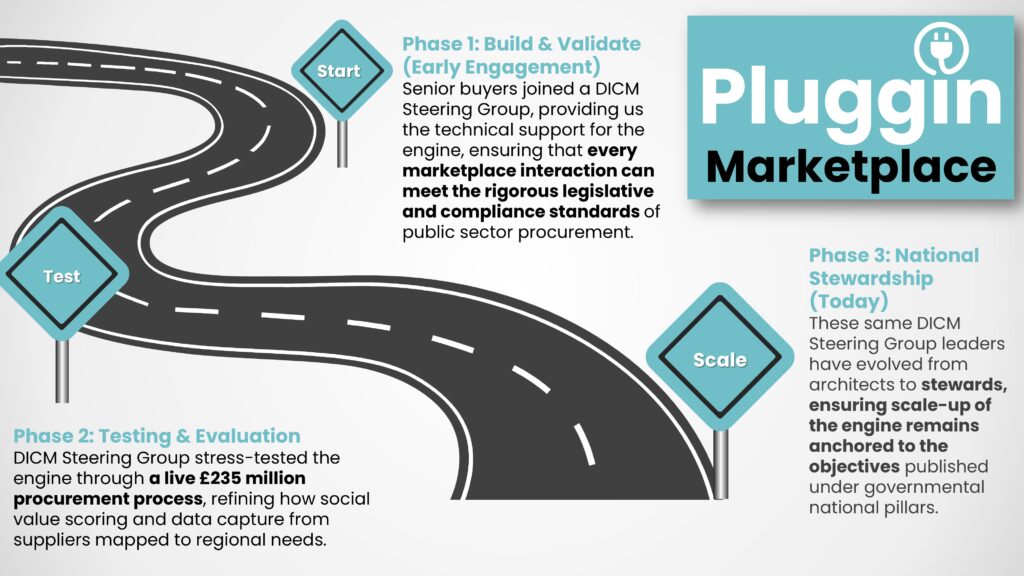
The DICM Engine was built with senior public buyers, to ensure that public buying and contracting - when scaled within the main civic infrastructure - met with rigors of existing and future regulations and demands.
Find out more about the Steering Group
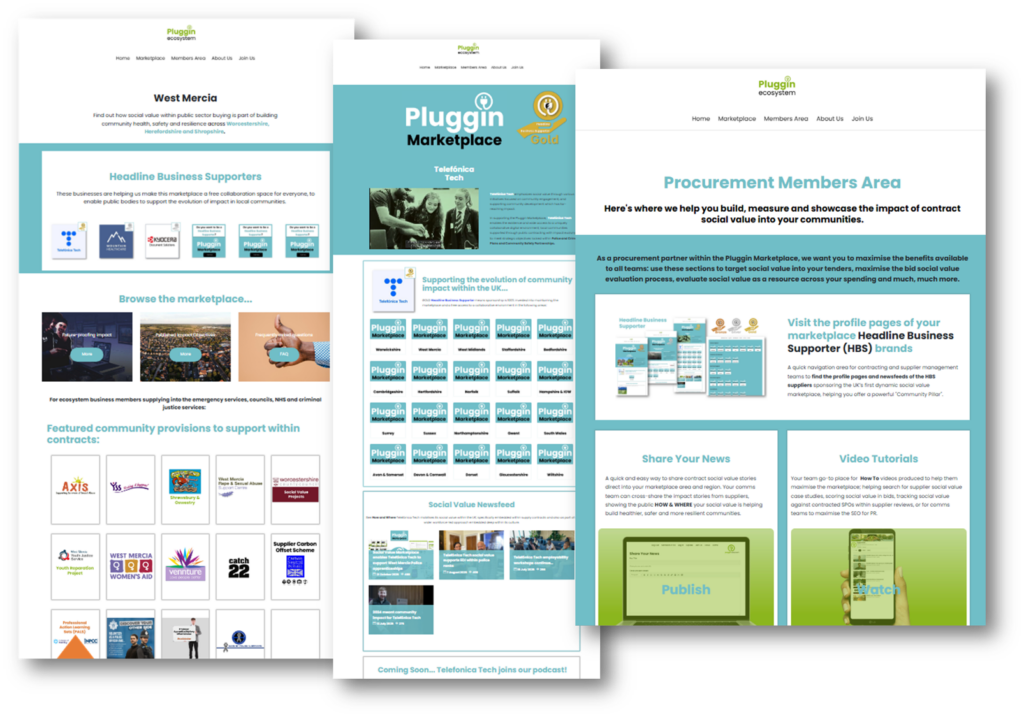
Many well-known suppliers were quick to join...
Being visible within the Pluggin civic infrastructure means that business suppliers need to be active through their marketing, enabling their ability to contribute to national, regional and local objectives can be see by government agencies and public buying authorities when it comes to winning/renewing public contracts.